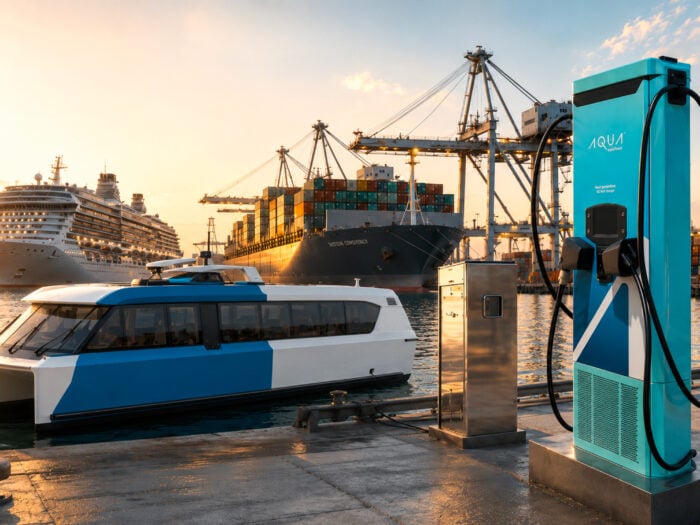
Rome, Italy – The next phase of port electrification will be defined not by infrastructure alone, but by how effectively it operates in practice.
At Assiterminal’s 25th anniversary in Rome, NatPower Marine outlined a clear industry shift: from deploying shore power assets to delivering fully integrated, operational energy systems.
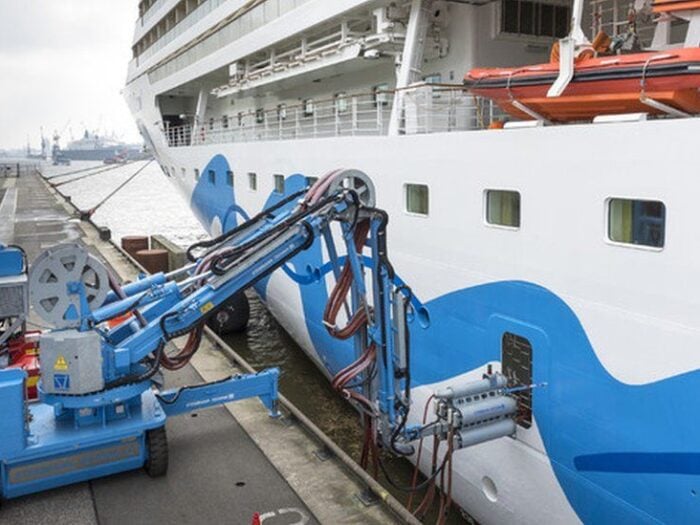
Shore power is one of the most immediate pathways to decarbonising ports, supported by European regulation and approximately €920 million in national funding through the PNRR and PNC programmes. Proven technologies are already in operation across leading ports in Northern Europe, the Mediterranean, and the United States. The challenge is no longer technical, it is operational.
Delivering high-voltage power at the quayside requires seamless integration with port activity, from cargo handling to passenger flows and vessel turnaround. Without this alignment, infrastructure risks underperformance and limited commercial viability.
NatPower Marine’s approach addresses this directly. By integrating infrastructure, energy supply, and operations from the outset—and involving terminal operators early in the design process—the company ensures shore power systems are built for real-world conditions. This creates more efficient delivery models, improved reliability, and transparent, competitive energy pricing.
Marcello Stanislao, Chief Development Officer, Southern Europe at NatPower Marine, said: “Shore power is no longer a question of technological readiness, it is a question of system design and operational integration. If we want electrification to succeed at scale, we must move beyond infrastructure delivery and build energy systems that work seamlessly within the daily reality of port operations.”
Looking ahead, ports are evolving into integrated energy hubs. This includes local renewable generation, long-term power purchase agreements to stabilise energy costs, and the deployment of Battery Energy Storage Systems (BESS).
BESS plays a critical role in managing peak demand, stabilising load profiles, and reducing overall energy costs, making electrification both operationally viable and commercially sustainable.
NatPower’s broader energy expertise reinforces this model. In Italy, the Group has secured 250 MWh of capacity through Terna’s MACSE framework, positioning it among a limited number of independent operators with direct experience in large-scale storage deployment.
As investment accelerates, the focus is shifting from infrastructure rollout to system performance. The ability to integrate energy, operations, and commercial models will define the competitiveness of ports in the years ahead.
NatPower Marine’s role is clear: to move beyond infrastructure and deliver the systems that make maritime electrification work.