Press release: 20th May 2025
- NatPower Marine and Peel Ports Group announce plans to establish UK’s first green shipping corridors with Ireland.
- Proposals would see NatPower Marine invest over £100m across Peel Port Group’s eight ports to establish charging infrastructure for e-ships and electric cars, vans and HGVs.
- First routes identified include Belfast-Heysham and Dublin-Birkenhead, supporting plans for Heysham Port in Lancashire to become the UK’s first net zero port.
- Collaboration is the first part of a £3 billion global network of 120 “clean ports” planned by NatPower Marine by 2030, enabling ship operators and cargo owners to plan clean shipping routes.
In a ground-breaking new collaboration that could provide a blueprint to drastically cut global shipping emissions, NatPower Marine and Peel Ports Group, a major UK port operator, today announce plans to establish the first “green shipping corridors” between Ireland and the UK.
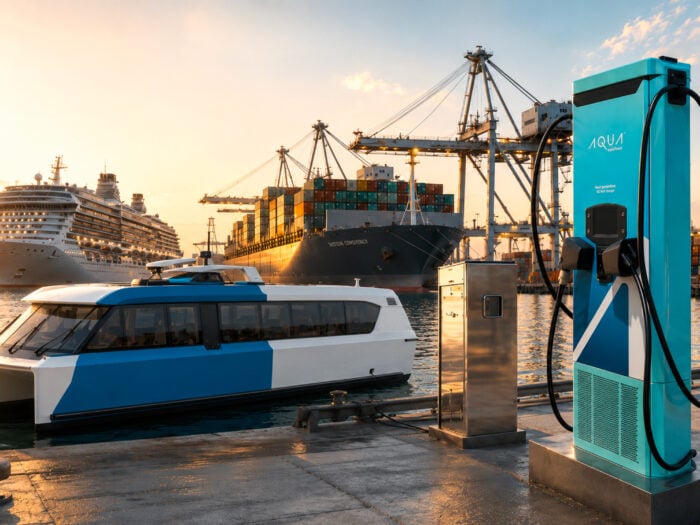
The proposed project would see NatPower Marine develop the UK’s first commercial electric ship (e-ship) charging network to support electric propulsion and cold ironing (the process of accessing clean power while docked to avoid significant engine pollution while at the port), as part of a global network.
The network – which would require an estimated £100m investment from NatPower Marine – would see this dedicated e-ship charging infrastructure delivered across all eight UK and Irish ports operated by Peel Ports Group. The master plan would also include electric car, van and HGV chargers installed for commercial electric vehicles passing through the ports.
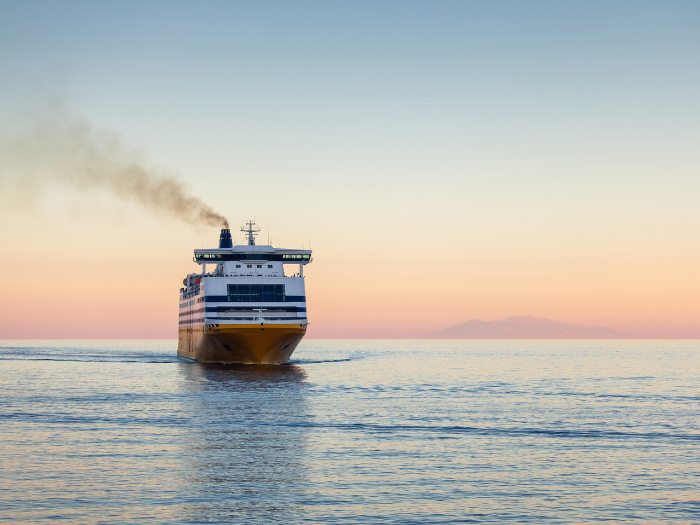
Over 3,000 vessels cross the Irish Sea every year, emitting 230,000 tonnes of CO2, 20,000 tonnes of nitrous oxide (NOx), and 18,000 of sulphur oxide (SOx). Connecting these to onshore electric charging when in port could dramatically reduce these emissions, supporting climate goals and improving local air quality.
The first Irish Sea routes identified in the proposals include Belfast-Heysham and Dublin-Birkenhead. This would support Peel Port Group’s ambitions for Heysham Port in Lancashire to become the UK’s first ‘net zero port’. The port has already slashed the emissions of its landside plant, equipment and vehicles by up to 90%.
The plans mark the first step in a new £3 billion global charging network, planned by NatPower Marine for 120 port locations worldwide by 2030. NatPower Marine will develop the sites, in partnership with port operators, and act as the long-term operator of the global charging network.
Stefano Sommadossi, CEO at NatPower Marine, said:
“NatPower Marine is investing to deploy the largest global network of charging points to help solve the ‘chicken and egg conundrum’ facing this industry: shipping lines cannot electrify their vessels if port charging infrastructure is not available, and ports are unable to raise capital for charging infrastructure without certainty of demand from shipping lines.
“With marine trade set to triple by 2050, we urgently need to build the global network of clean energy charging infrastructure the industry desperately needs. Our partnership with Peel Ports Group is the first step in this strategic approach to accelerate the adoption of clean energy in shipping and help cargo owners to reach net-zero.”
Claudio Veritiero, CEO at Peel Ports Group, said:
“The proposals presented as part of this partnership are potentially game-changing, and fully support our ambitions to become a net-zero port operator by 2040.
“We look forward to working closely with NatPower Marine to explore the possibilities for establishing the first green shipping corridor between the UK and Ireland, and further enabling support for our customers, shipping lines and hauliers as they transition to a greener future.”
Driving the marine industry towards Net Zero
Shipping is the engine of the global economy, facilitating over 80% of trade and supporting countless jobs and coastal communities. With 95% of its trade transiting via ports, the UK is the natural starting point to decarbonise the marine industry, creating an opportunity for significant economic development in the process.
However, the sector also poses significant environmental challenges, accounting for more than 3% of global carbon dioxide emissions (CO2) – more than Germany’s annual emissions. It also emits 15% of NOx and 13% of SOx globally.
One sixth of these emissions are produced whilst ships are berthed at port as they run auxiliary engines for power, which can have a significant impact on the environment and local communities around ports.
As regulation seeks to curtail these emissions and shipping lines increasingly electrify both at-port operations and at-sea propulsion, demand for clean energy is set to skyrocket. To decarbonise the industry 4 petawatt-hours (PWh) of clean energy per year is needed – equal to the annual electricity consumption of the USA.
NatPower Marine is taking a radically different approach to address this challenge, removing the biggest barrier to change – upfront investment. It will leverage its significant financial backing to build clean energy infrastructure at ports, that will enable electric propulsion and for ships to run on electricity while at berth or at anchor (“cold ironing”).
With infrastructure in place at ports and terminals across global shipping routes, shipping lines can have the confidence to transition their fleets, purchasing clean charging services directly from NatPower Marine at each port they service.
NatPower’s funding enables it to make significant up-front investments in port infrastructure. In April this year, NatPower Group further strengthened its financial position with an investment of approximately 50 million Euros from VINCI – a world leader in the concessions, energy and construction.
NatPower is also developing over 15GW of clean energy GigaParks projects in the UK, with 60GWh of battery storage capacity, crucial for balancing intermitted demand like electric ship requirements for propulsion and cold ironing. These GigaParks will provide stable clean electricity to NatPower Marine’s UK port network via direct Power Purchasing Agreements, or private wires.
About the partnership
NatPower Marine and Peel Ports have agreed a Memorandum of Understanding (MOU) to develop green corridors and onshore infrastructure at Peel Group’s Ports. As part of the partnership, NatPower Marine will provide cold ironing eShip charging services to ship operators at anchor and at berth. Electric vehicle charging services for trade cars, vans and HGVs will also be developed.
NatPower Marine will design a ‘master plan’ for installing this infrastructure at Peel Port Group’s eight UK and Irish ports. This includes assessing grid connection and power requirements for the required infrastructure, and agreements on the sequencing and timings of the rollout in order to create green shipping corridors.
About NatPower Marine
NatPower Marine, part of the NatPower Group, is developing the largest independent network of ship charging facilities to provide clean electricity for propulsion and cold ironing, as part of a fully integrated Smart Energy Transition-as-a-Service solution to the global maritime sector.
The company develops the essential end-to-end infrastructure required for the decarbonisation of global supply chain routes, providing shore-power to support the electrification of ships for propulsion and cold ironing at berth, at anchor, and offshore.
The NatPower Group is a global energy transition developer with approximately 30 GW of natural power projects, with a presence in the UK, USA, Italy, Kazakhstan, among others. The company has an ambitious expansion plan to become the largest and fastest growing global energy transition enabler. NatPower H, a subsidiary of NatPower Group, is currently building the world’s first green hydrogen refuelling station infrastructure for pleasure yachting.
About NatPower UK
NatPower UK is a sister company to NatPower Marine. NatPower UK has one of the largest clean energy development portfolios in the UK and will bring over 60 GWh of battery storage online in the UK by 2040, integrating large scale smart clean energy generation and distribution with large scale intermittent clean energy demand.
About Peel Ports Group
Peel Ports Group is the UK’s second largest port operator, owning and operating six of the UK’s most important ports (Liverpool, Heysham, Manchester Ship Canal, Medway (Sheerness / Chatham), Clydeport and Great Yarmouth). It also operates a container terminal in Dublin and owns BG Freight Line, which provides short sea container services between the UK, Ireland and mainland Europe and Peel Ports Logistics, one of the UK’s leading shipping and freight forwarders.
Peel Ports handles approximately 70 million tonnes of cargo every year. 14% of the total UK major ports traffic flows through ports operated by the Group. Headquartered in Liverpool, it employs around 2,000 staff.
Image: Peel Ports.